Systems
Grid System Office
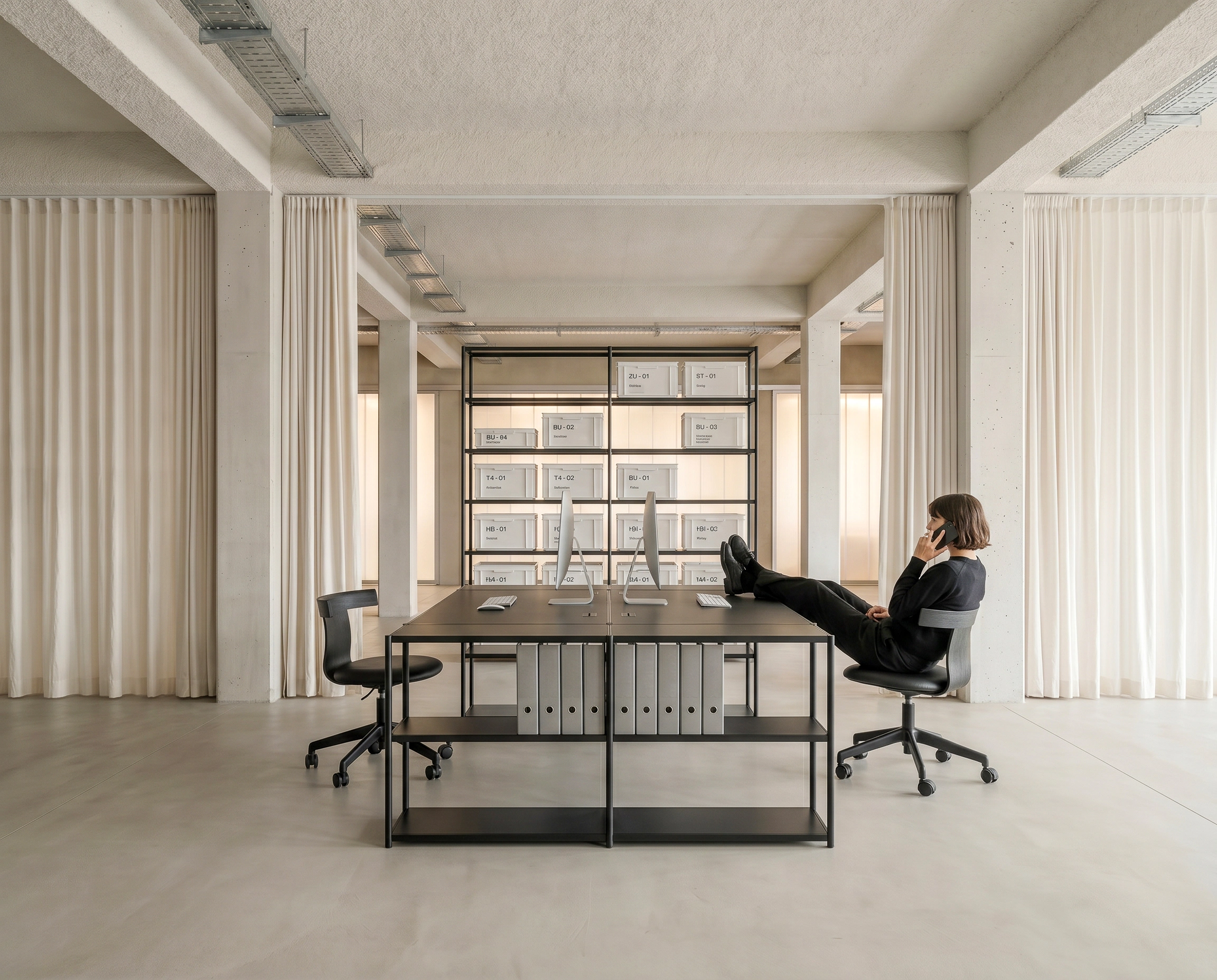
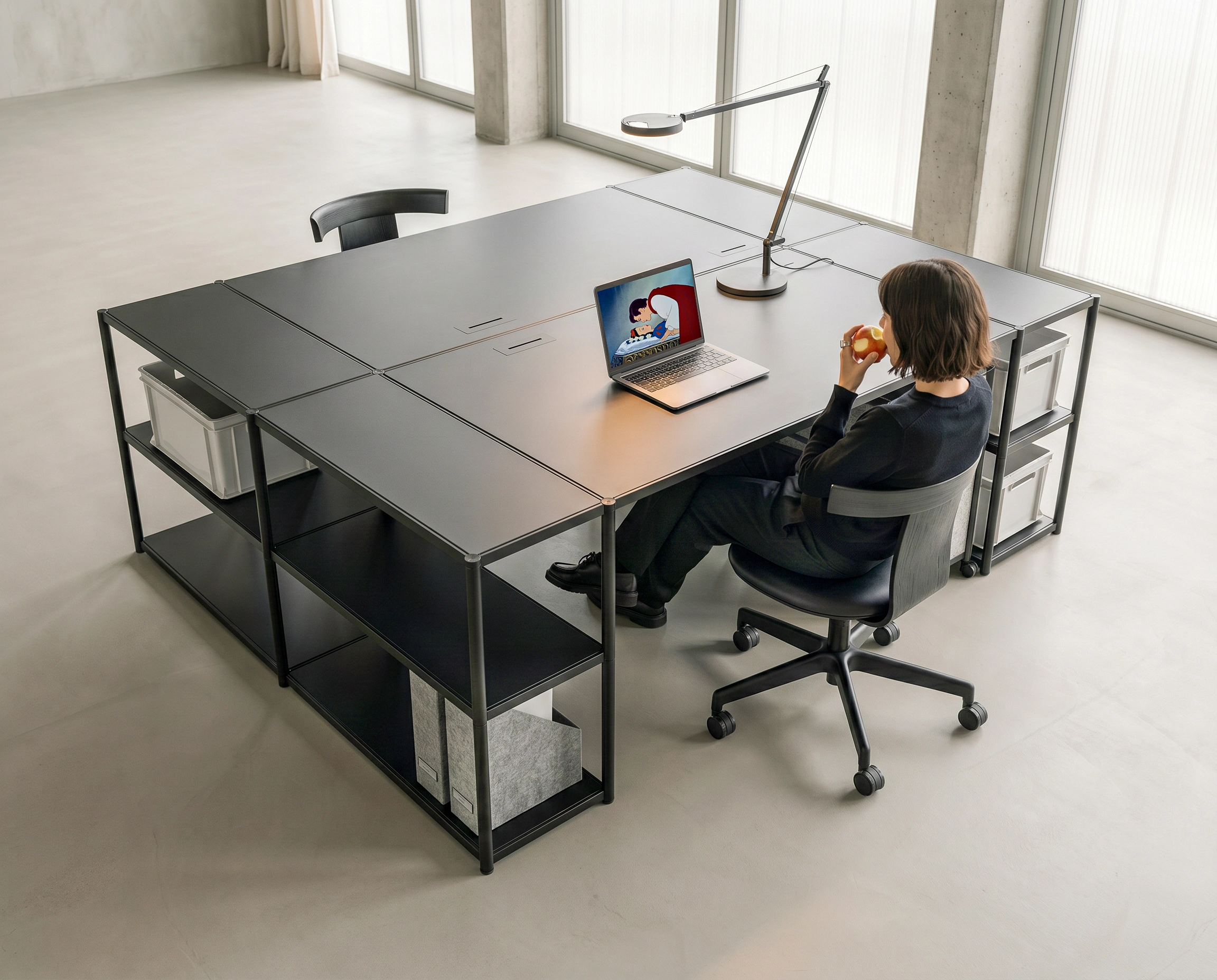
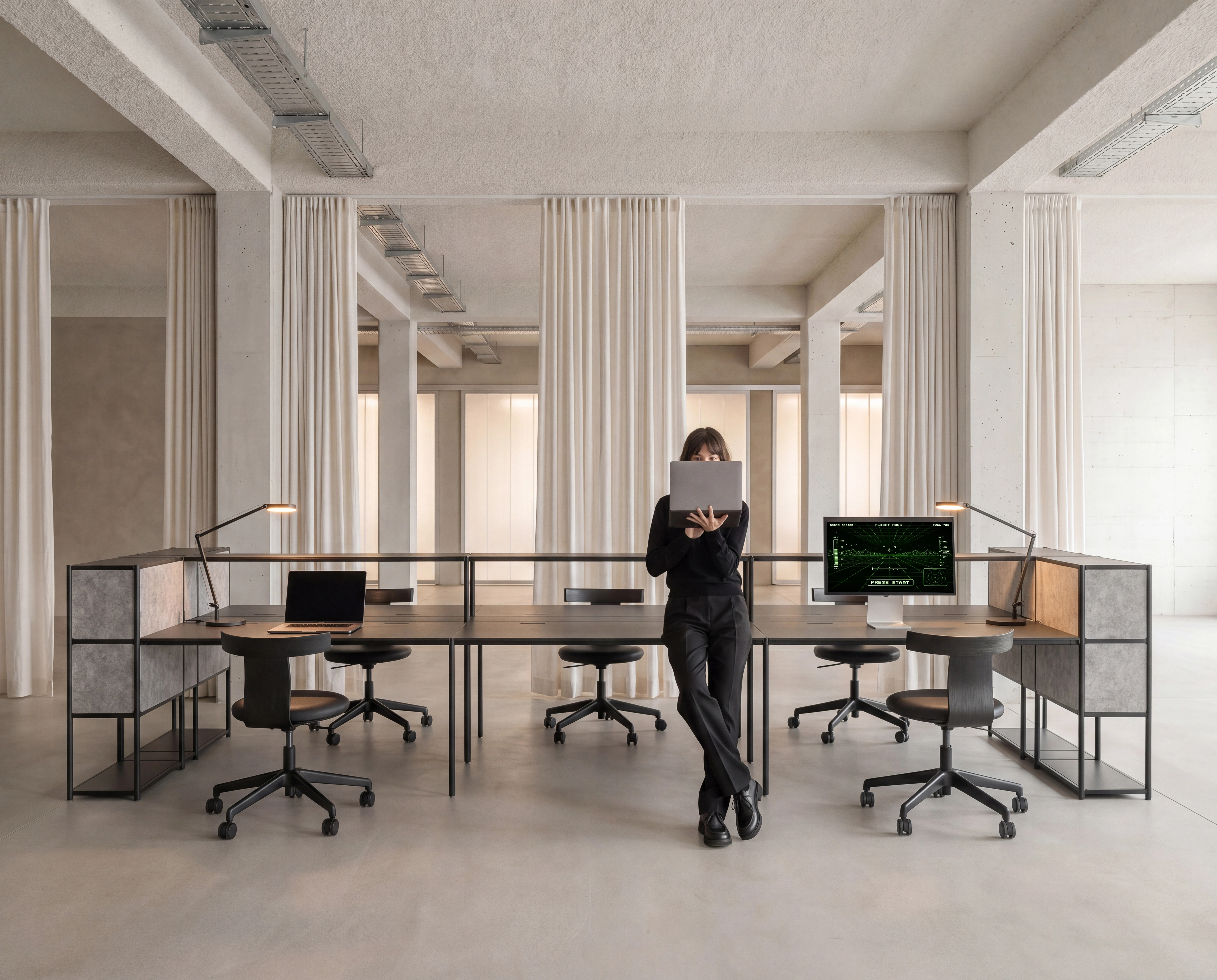
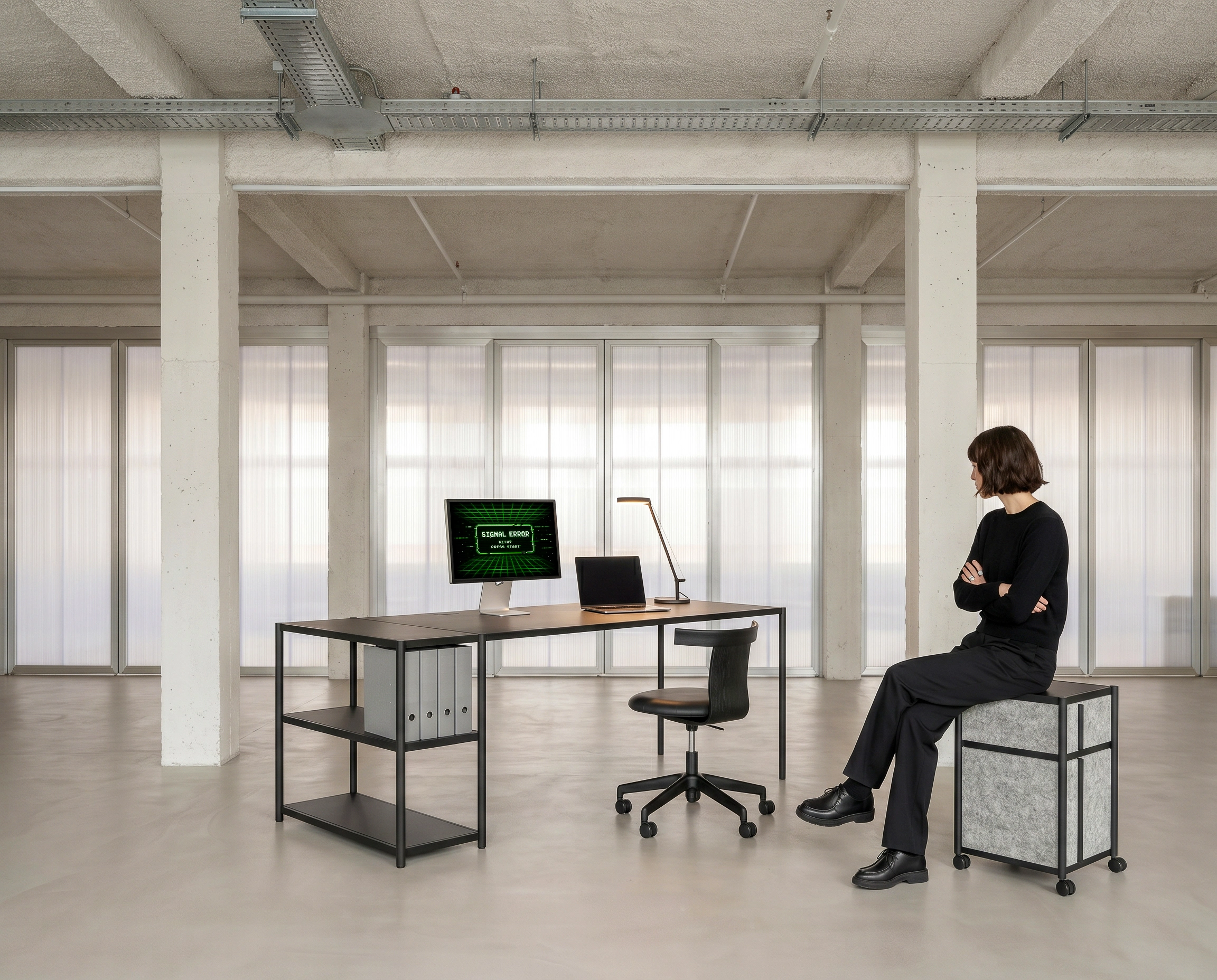
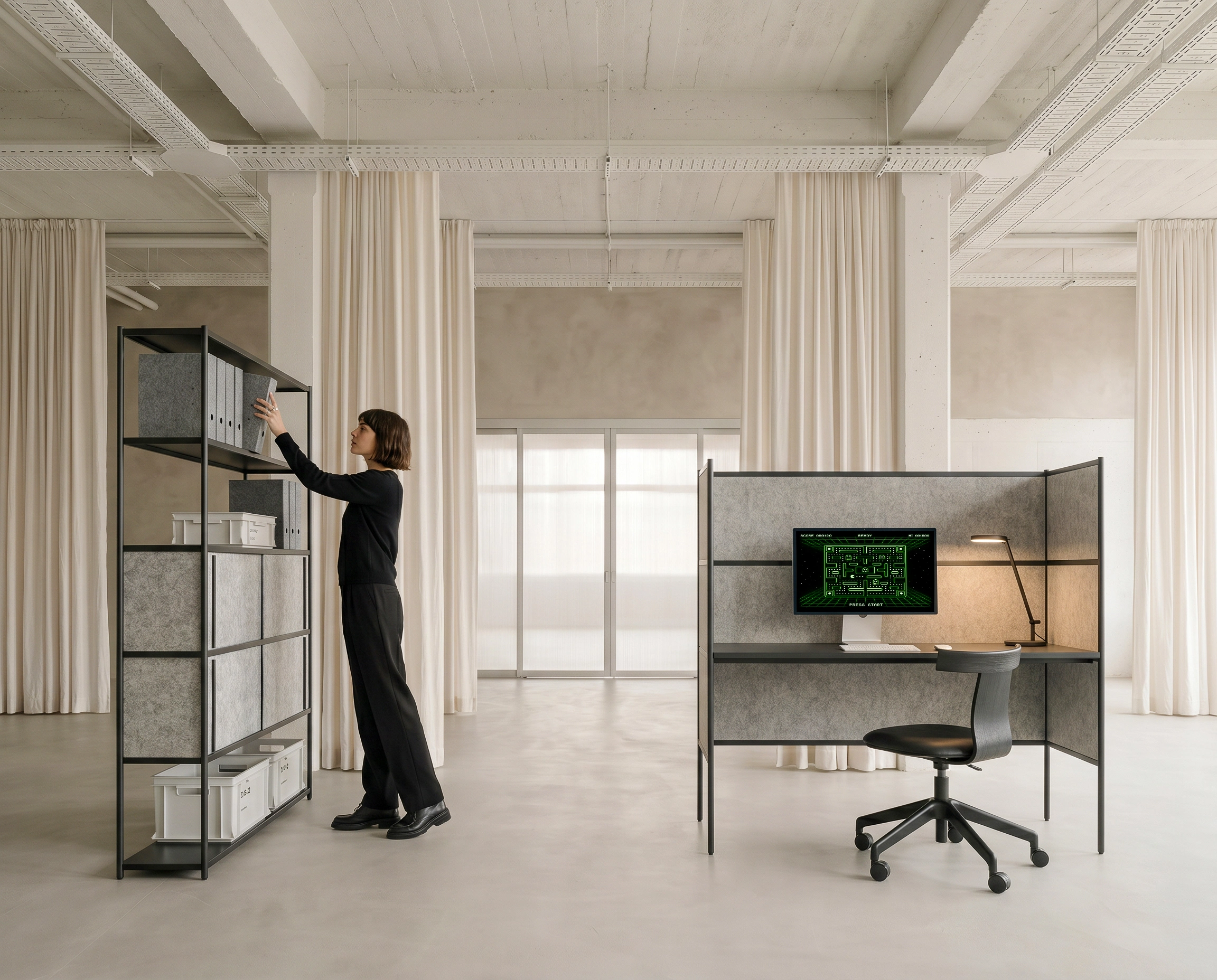
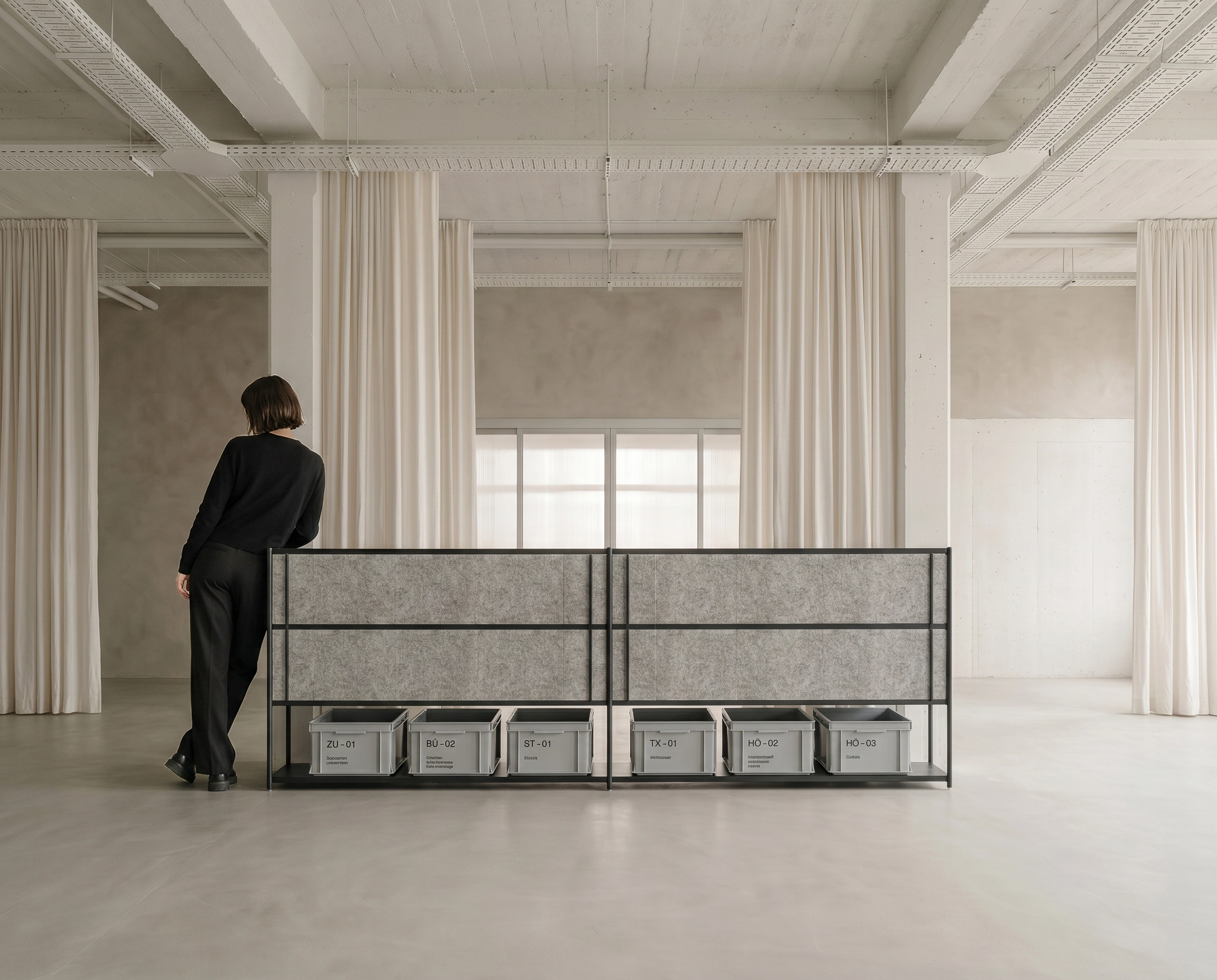
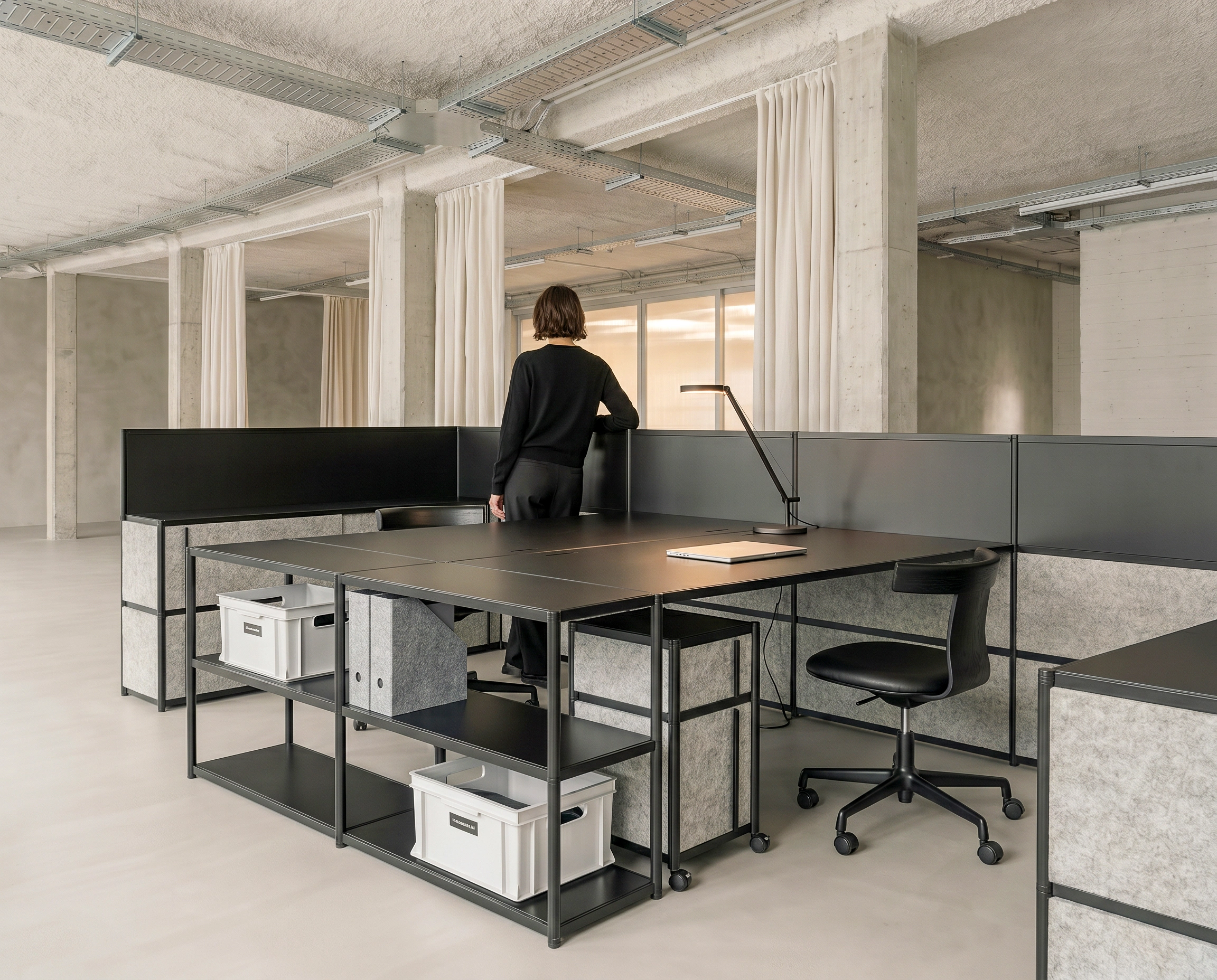
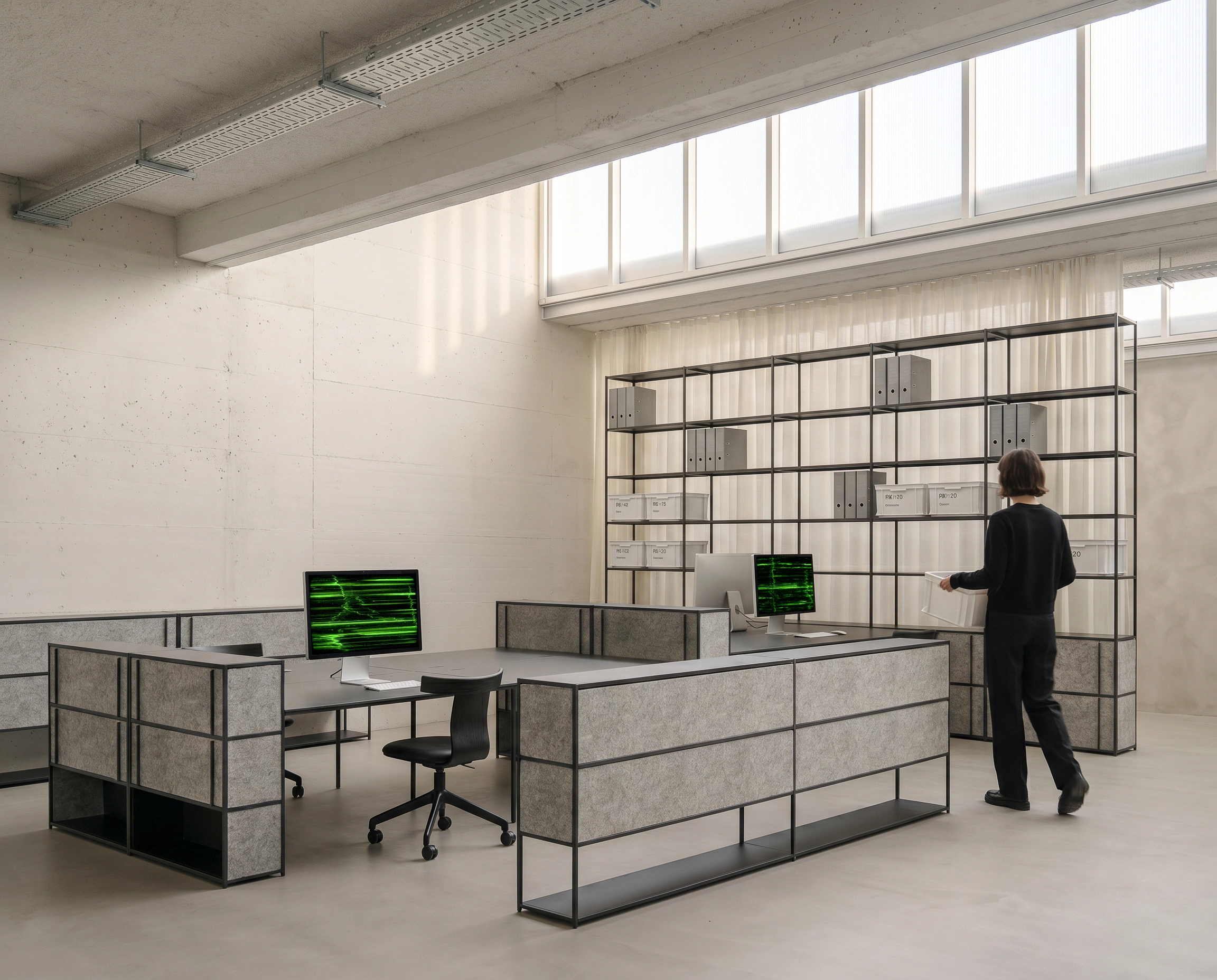
A modular workplace system organised around a universal node. Shelves, tables and partitions combine into a changing architecture within the room.
- Discipline
- Systems
- Object
- Workplace system
- Material
- Metal, form-fleece
Further views
Scroll to explore
The thinking behind
Grid System Office
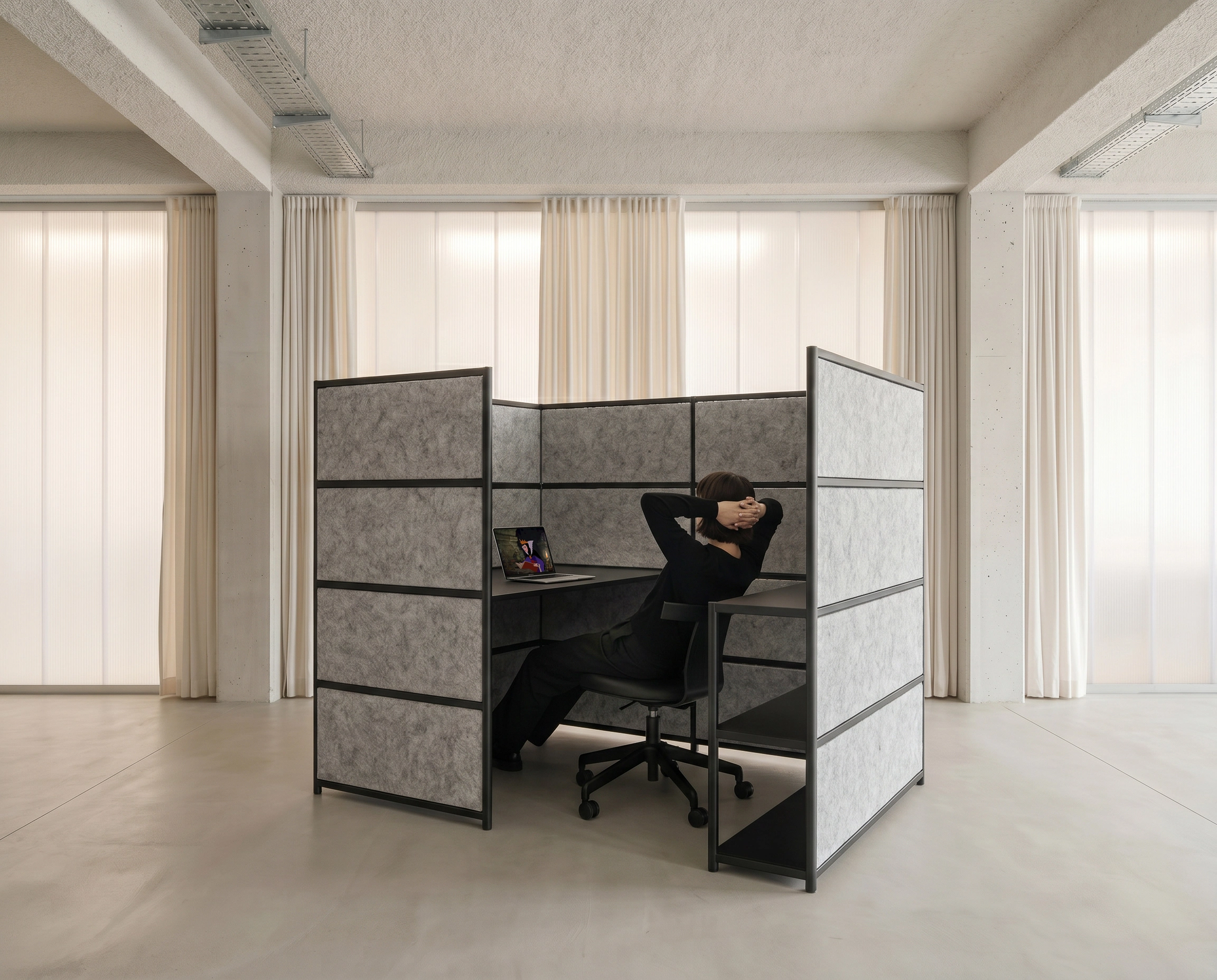
The office has always been in flux—redefined by culture, rationalization, and technology. Yet the driving force remains the same: the tension between privacy and communication. Grid is designed at this interface. It treats the workplace not as a fixed arrangement of furniture, but as micro-architecture inside the room: a flexible habitat that can be rebuilt into the right setting for each task.
The project starts from a strict systemic question:
How can maximum spatial and structural variety be achieved with as few different types as possible—using many identical, mass-producible parts?
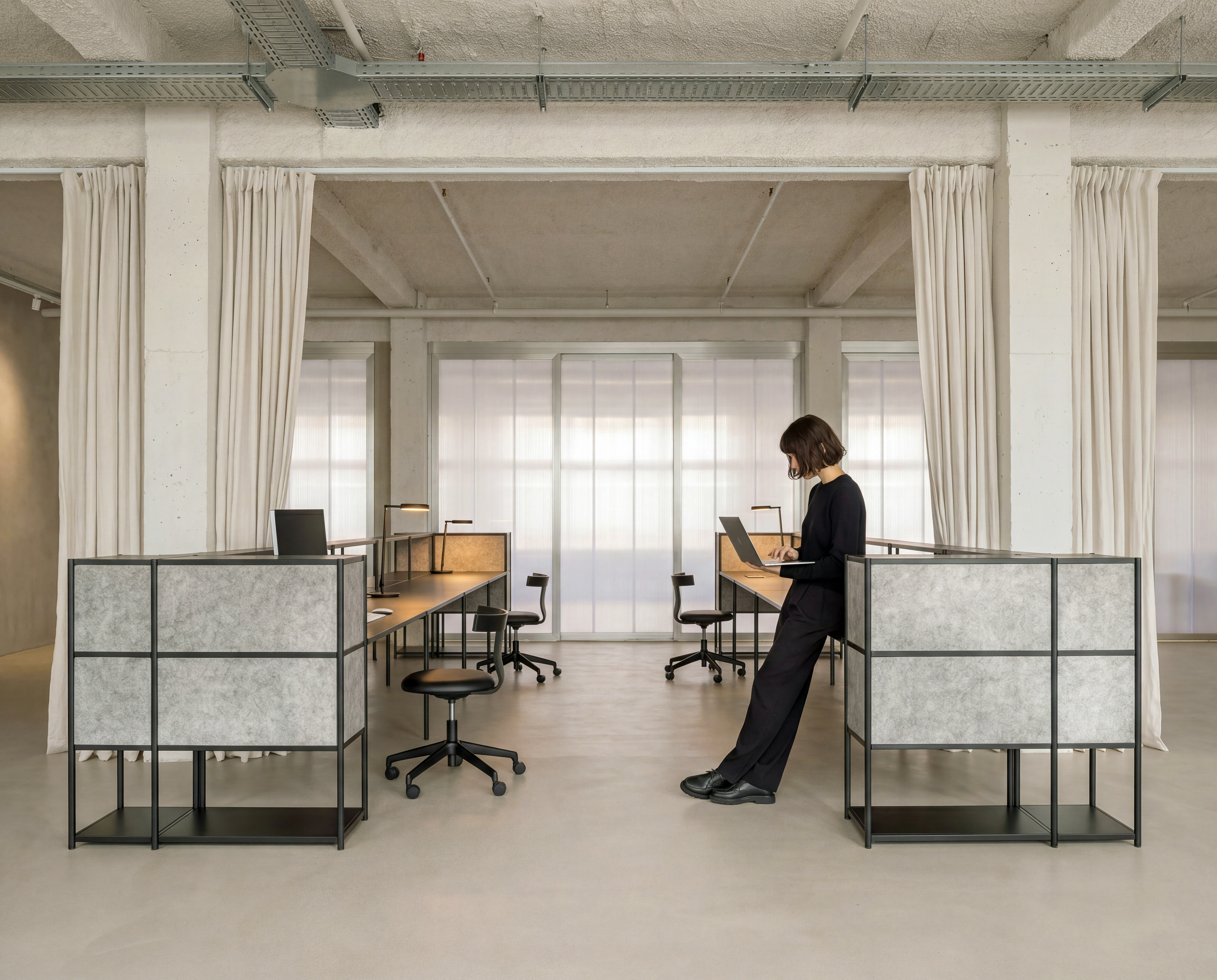
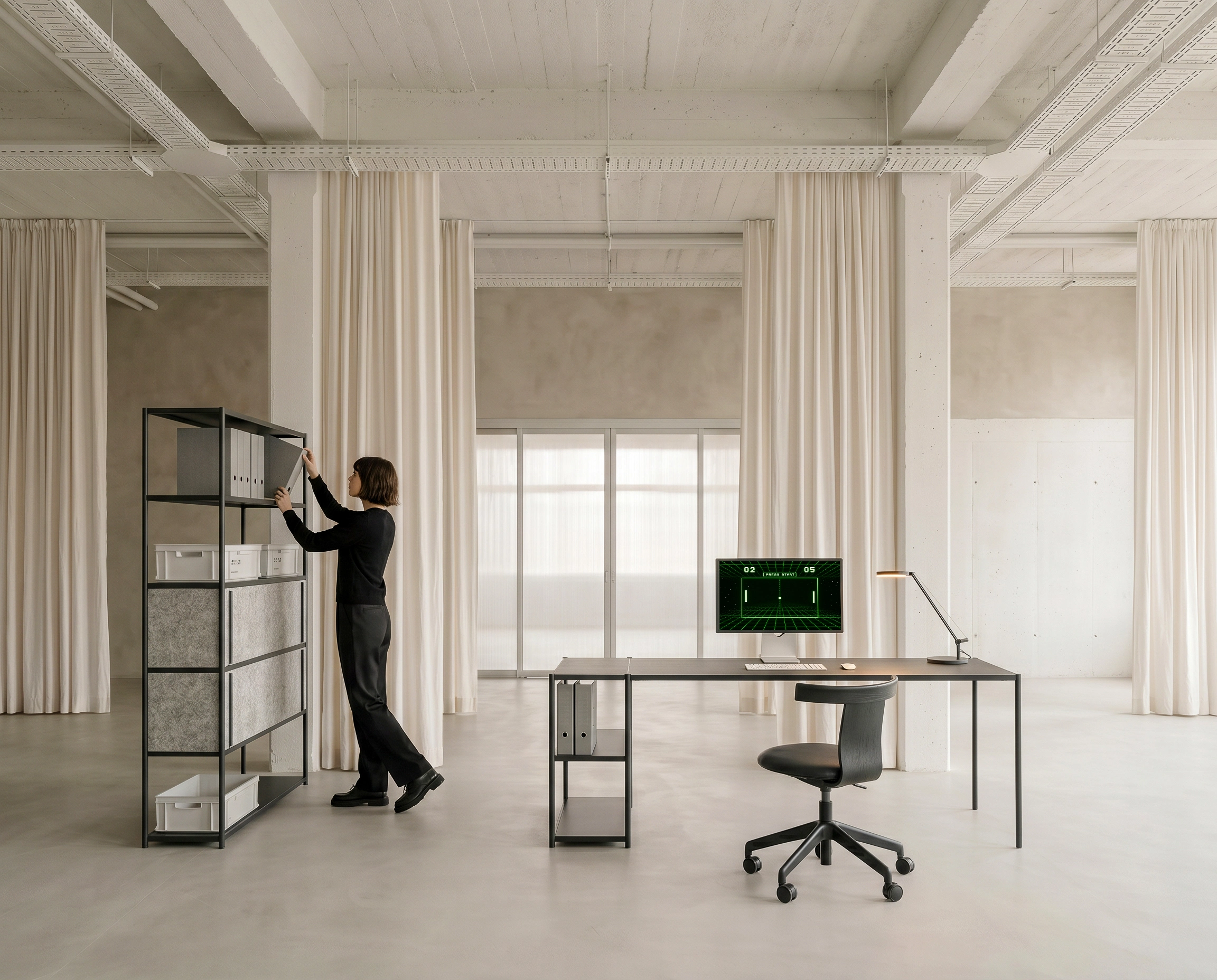
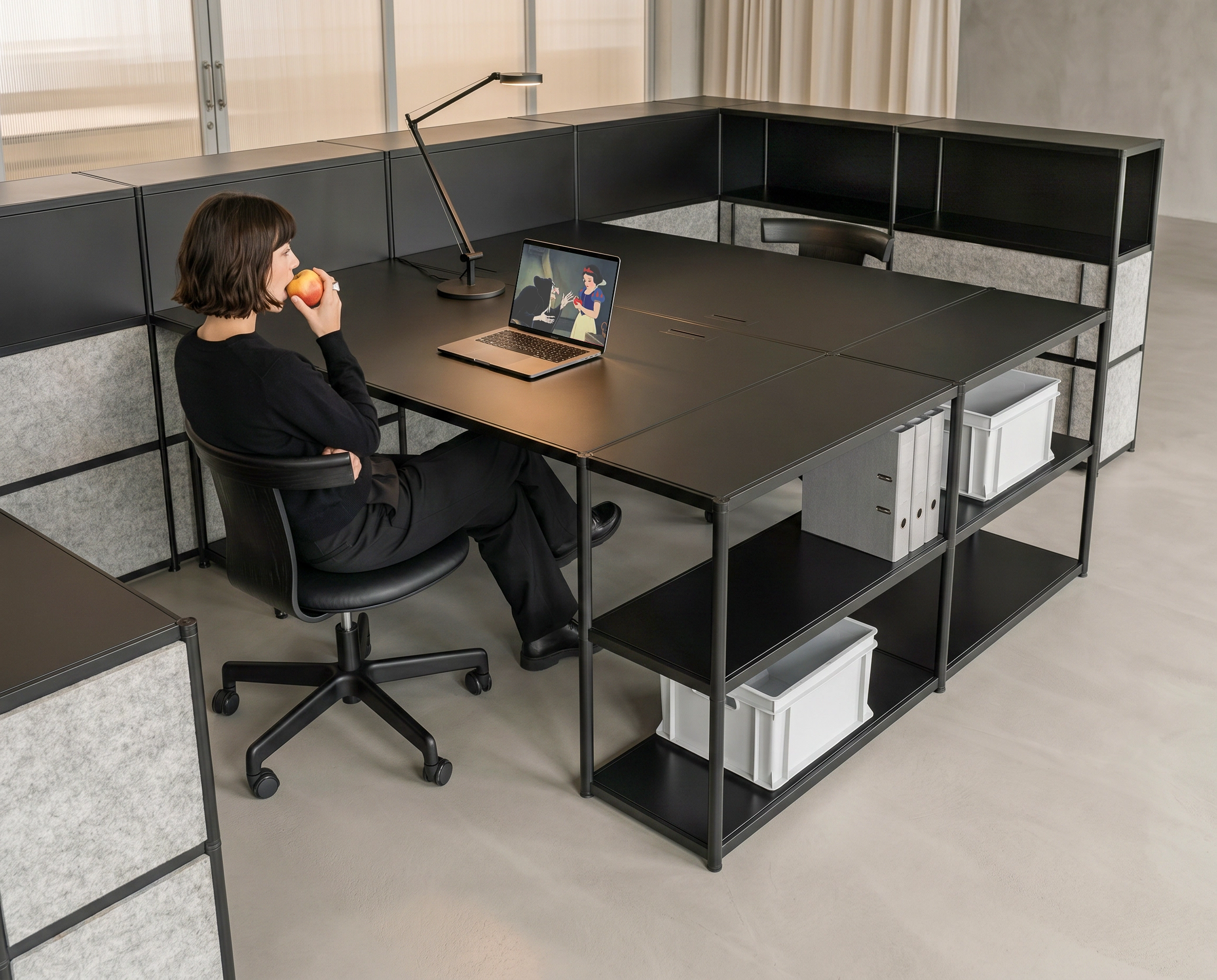
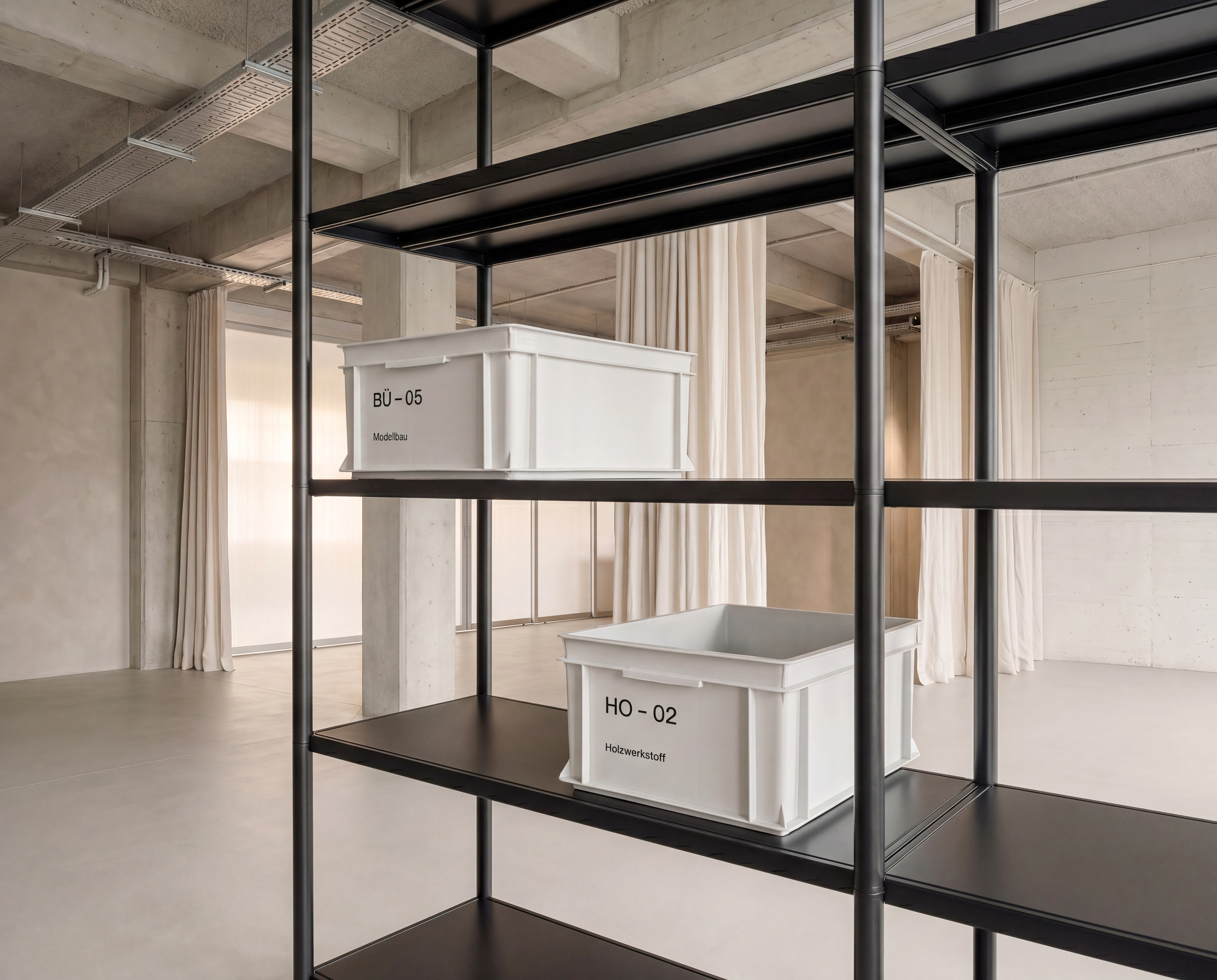
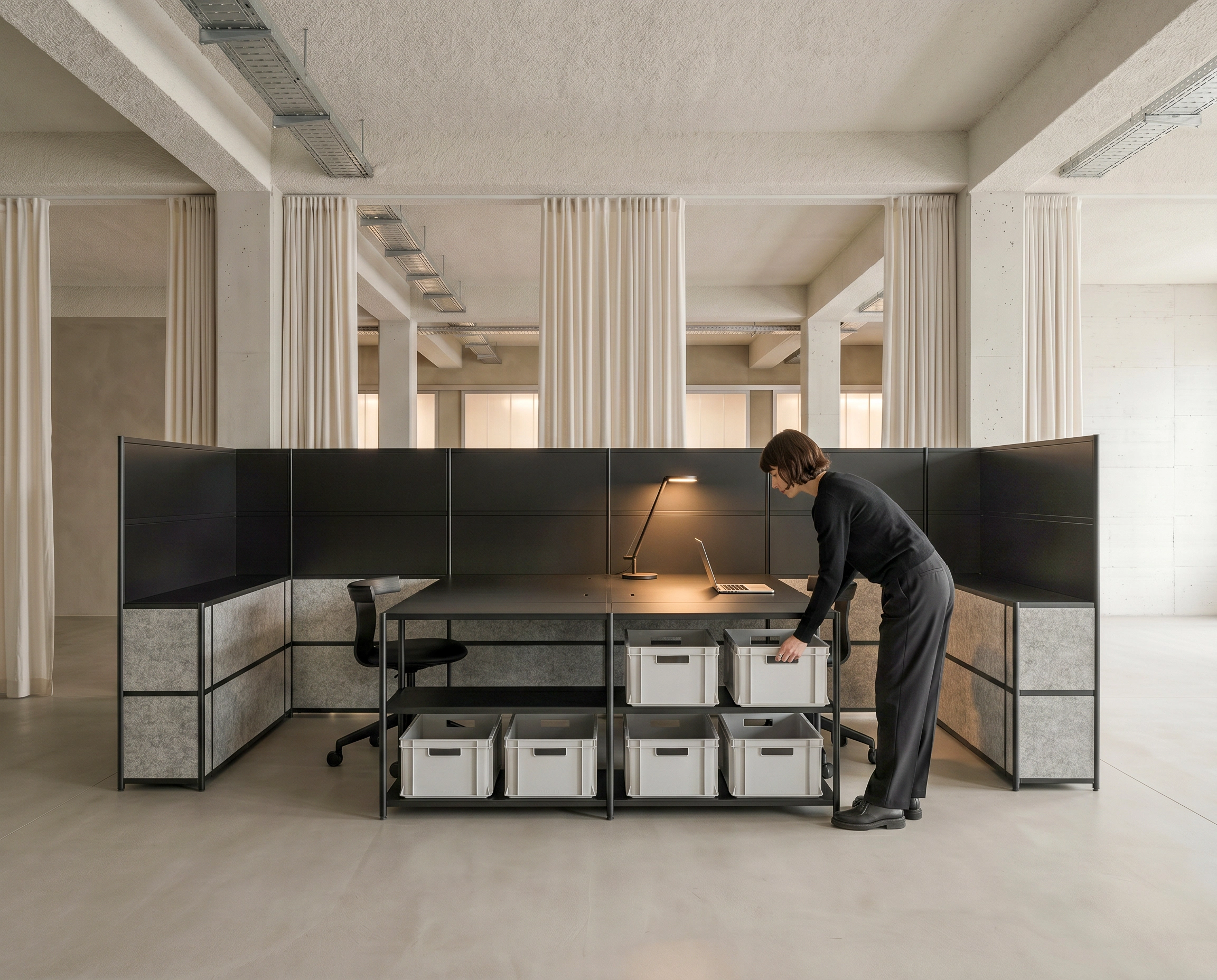
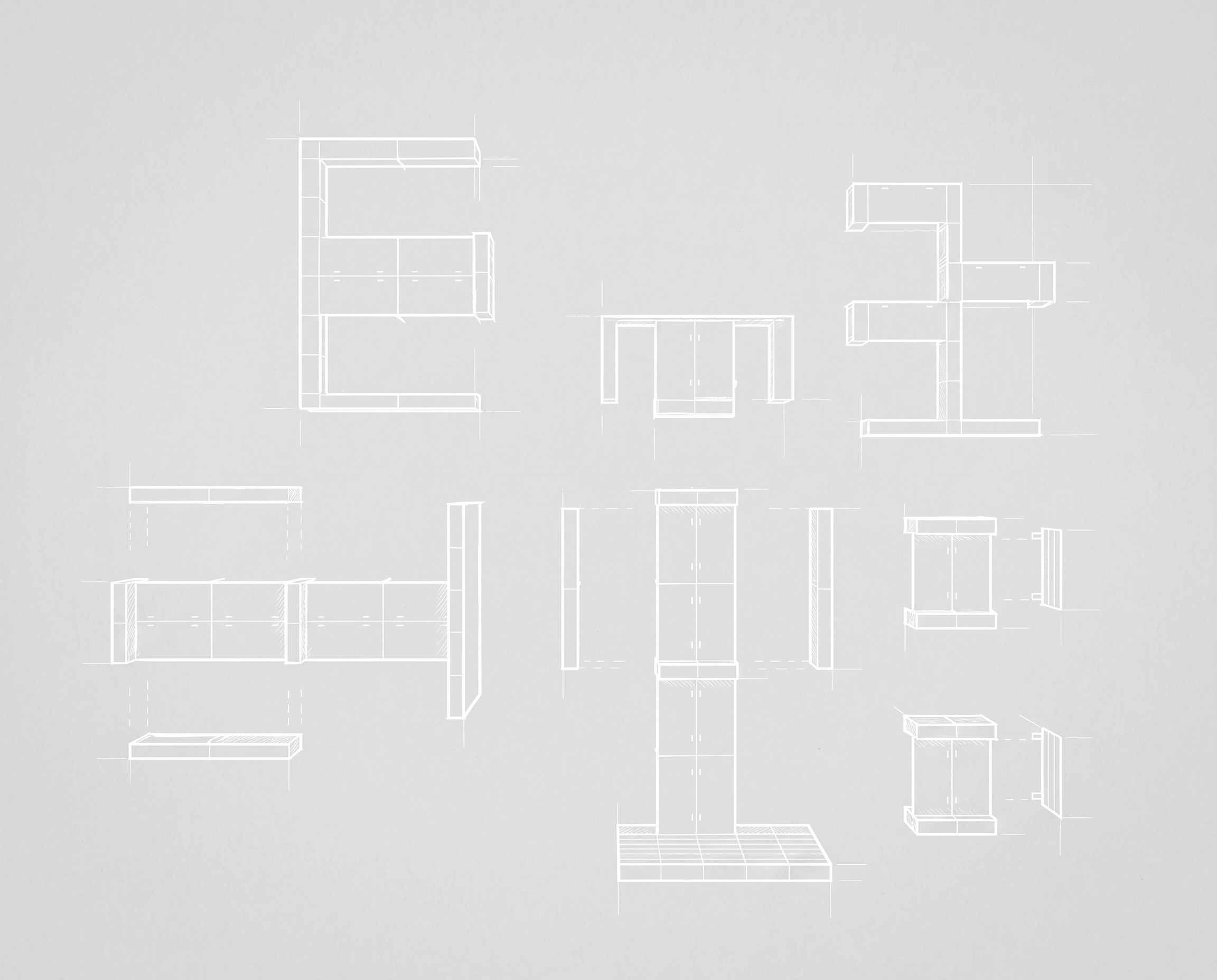
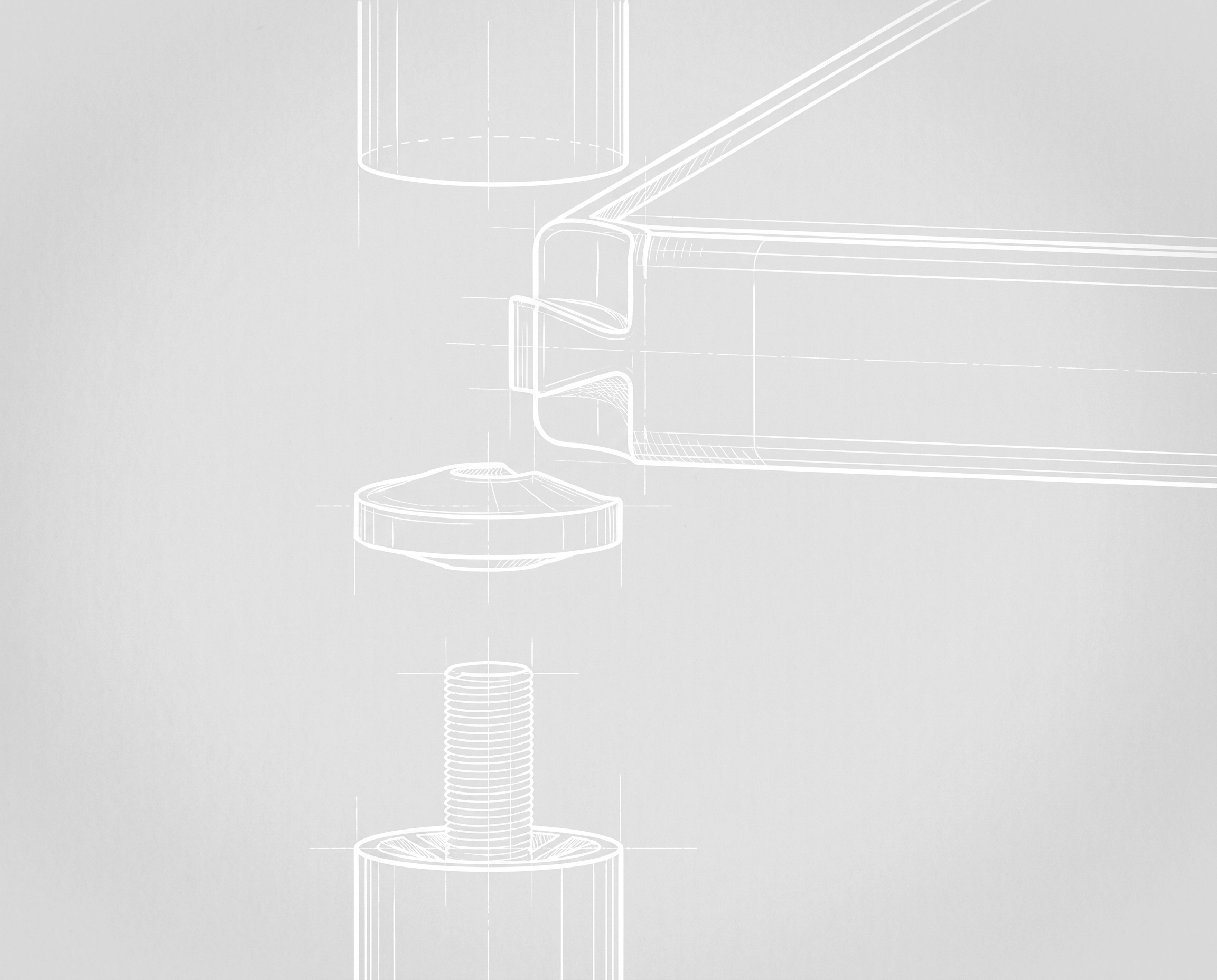
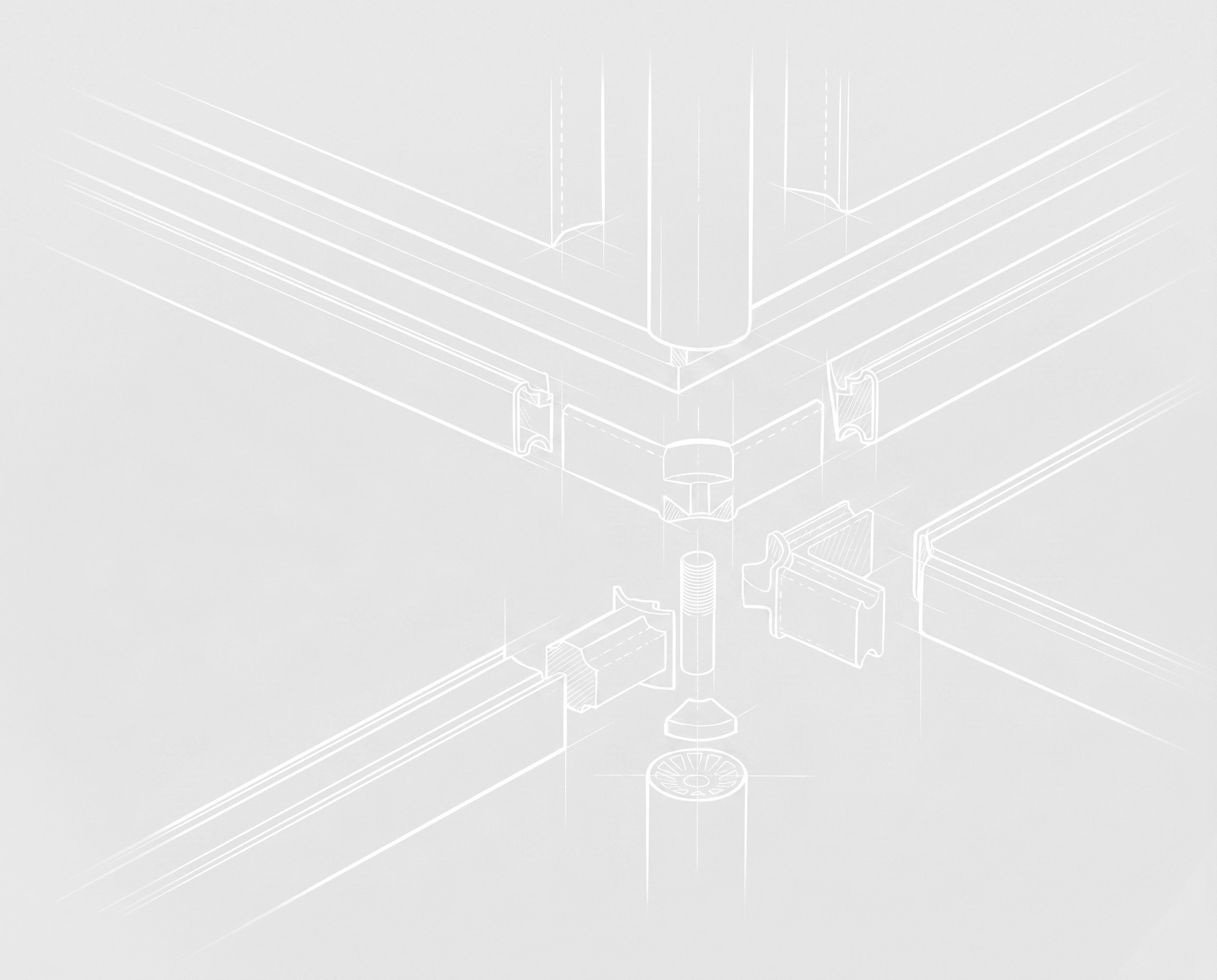
The answer is a universal node: a connection principle that allows basic modules—metal shelves, table elements, and partition frames—to be combined freely in three dimensions. Instead of adding specialized furniture pieces, Grid solves local needs (focus, exchange, storage, circulation, acoustic control) through configuration. At the same time, the system remains visually coherent: the grid is not decoration, but the direct expression of its construction logic.
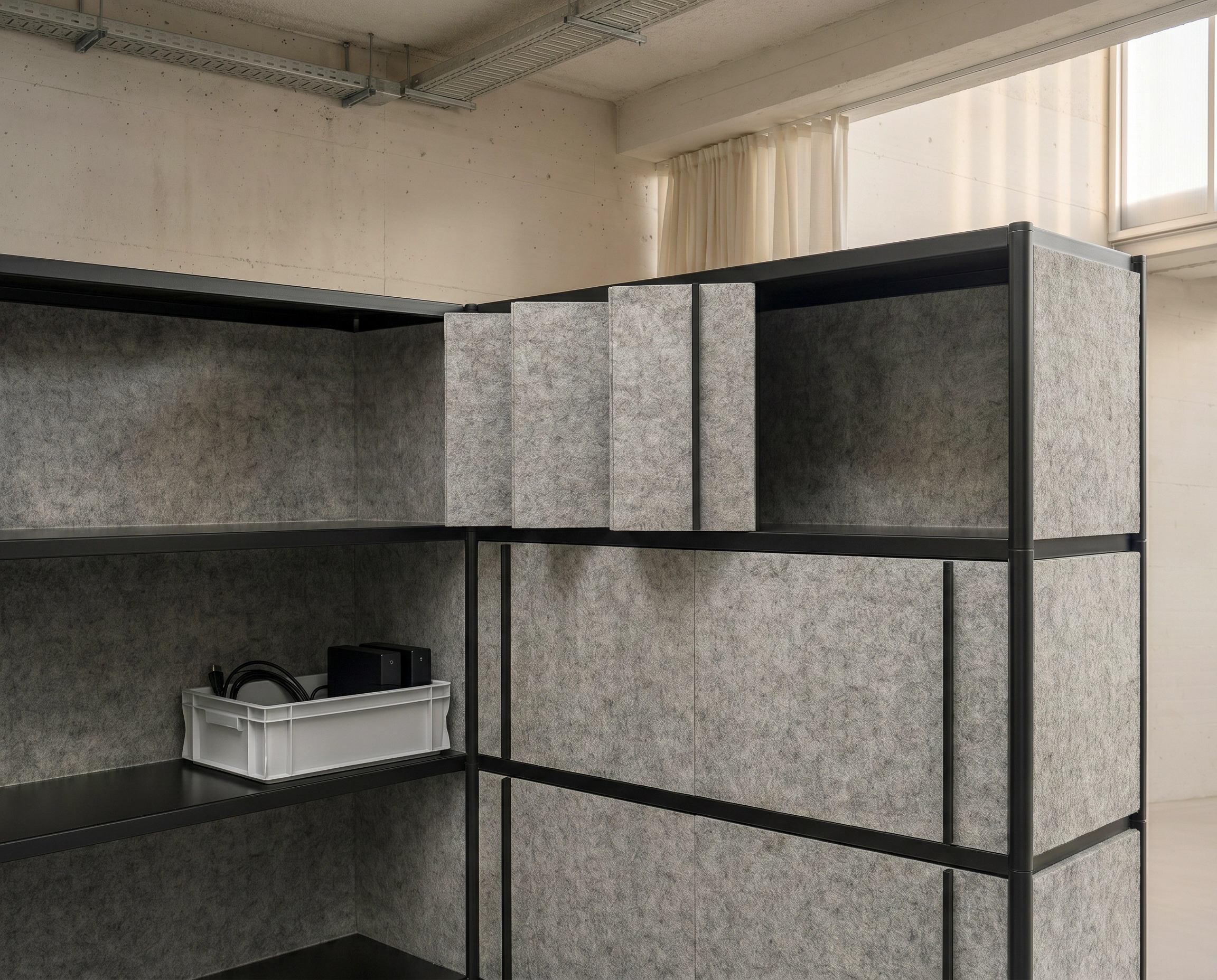
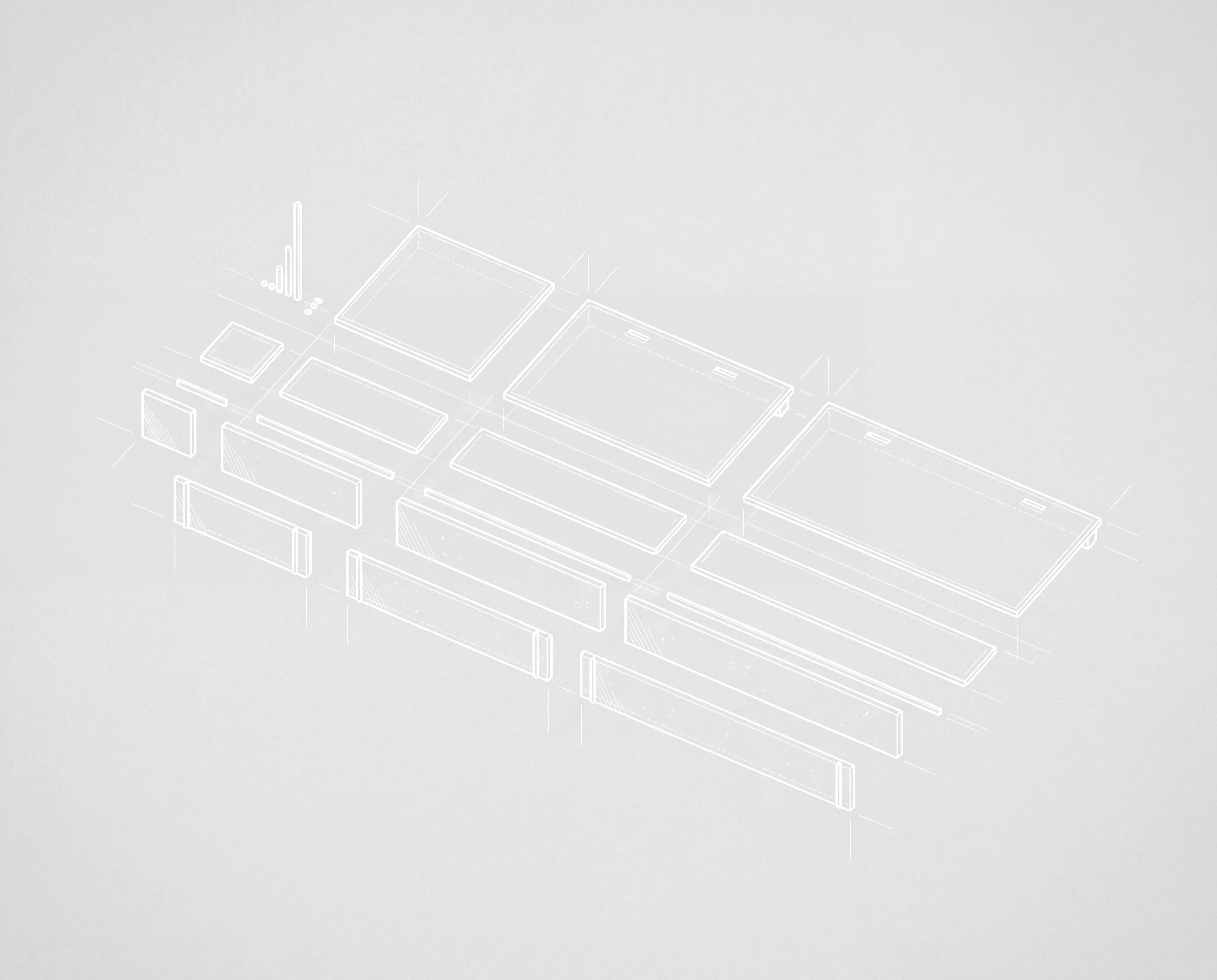
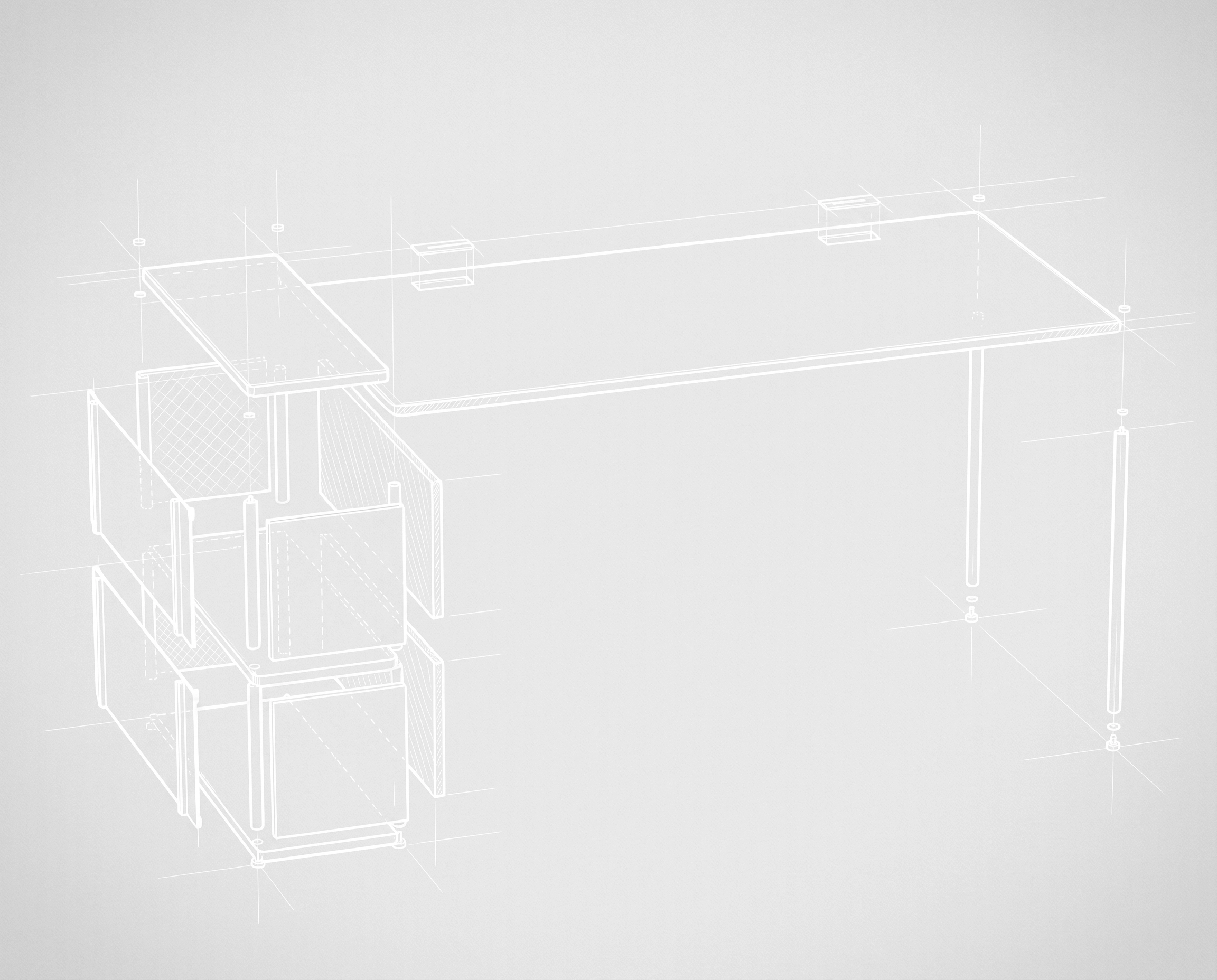
Grid consists of 6 assemblies with 42 components, forming a kit that can generate an open-ended number of workplace situations. Key elements include the metal shelf (tablar) as the structural backbone, inspired by space-frame principles (a hybrid of die-cast corners, extrusions, and sheet aluminum). Stiffening ribs are multifunctional—reinforcing the parts while also serving as integrated mounting and guide channels for infills and accessories. The table modules follow the same connector logic and can integrate cable management as an upgrade.
A distinctive feature of the system are its form-fleece acoustic elements: surfaces that shape sound and space. Produced in a hybrid pneumatic forming process, they can incorporate undercuts—allowing panels to plug directly into the frame through geometry alone, without additional fasteners. Together with compatible partition profiles and a material-driven folding sliding-door concept, the system supports rapid, residue-free reconfiguration.
Grid replaces the single fixed desk with a network of workplaces. It expands in every axis, stays fully reusable after disassembly, and achieves high adaptability through a clear raster, a universal node, and components that do more than one job—delivering maximum variance from a minimal, serially producible set.